
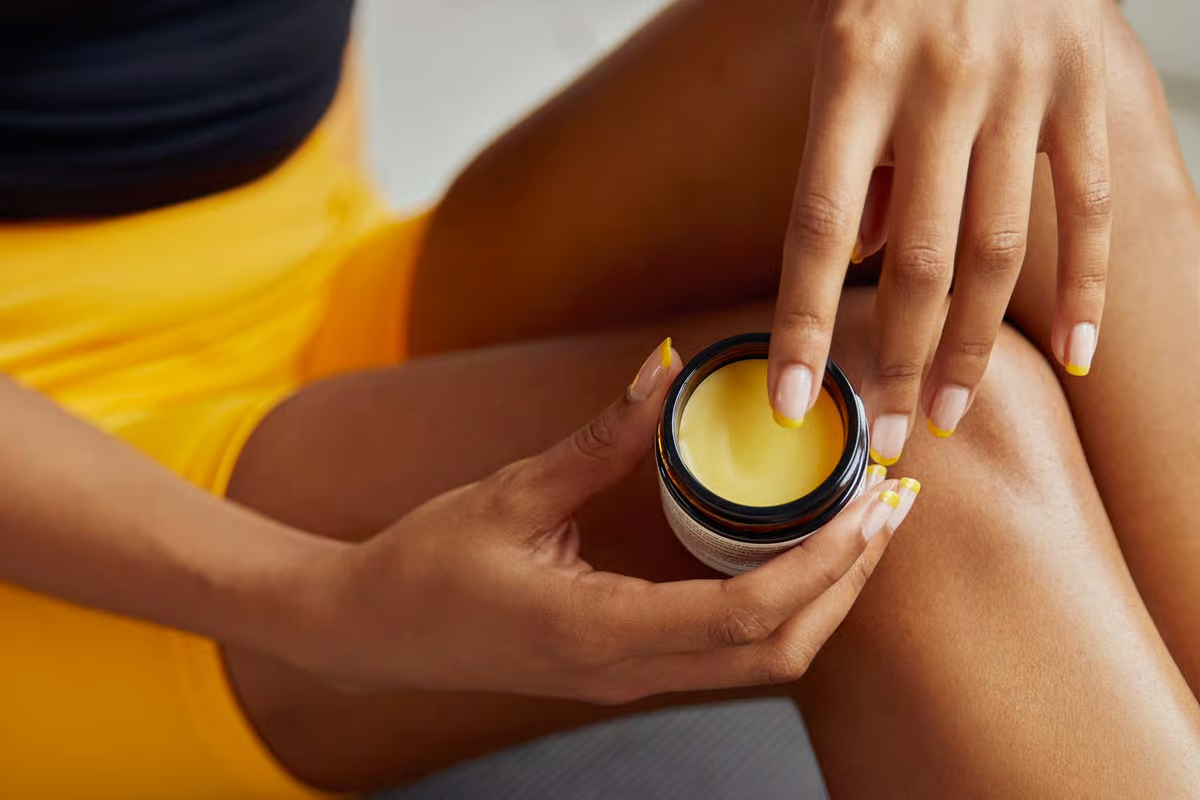
Topical CBD products are designed to be placed on the skin. They may be sold as creams, balms, salves, gels, lotions, roll-ons, or sprays.
Many people apply them over sore joints, tight muscles, or areas affected by everyday physical activity. However, correct application involves more than rubbing on a large amount and hoping for immediate relief.
CBD topicals have not been proven to treat every pain condition, and research remains limited regarding how much CBD reaches deeper tissues through the skin. Products often contain additional ingredients that may create most of the warming or cooling sensation.
These steps can help people use topical CBD products more carefully.
Read the Complete Label First
Before opening the container, confirm that the product is intended for topical use. Some CBD oils are made to be swallowed, while others are external-use products.
Review the suggested amount and frequency. Check whether the manufacturer warns against applying the product near the eyes, mouth, broken skin, or sensitive areas.
Read the ingredient list, not only the CBD concentration. Menthol, camphor, capsaicin, essential oils, fragrances, and preservatives can affect how the product feels.
Look for allergy warnings. People sensitive to coconut, tree nuts, fragrances, or particular plants may react to the carrier ingredients.
Check the expiration date and storage directions. Heat, moisture, and direct sunlight may affect product quality.
Confirm the CBD Amount
A label may display a large number such as 1,000 or 2,000 milligrams. This often represents the total CBD in the entire container rather than the amount in one application.
Look for information stating CBD per gram, pump, roll, or suggested serving. When that information is missing, precise dosing becomes difficult.
More CBD does not guarantee better results. Applying a thick layer may waste the product and increase exposure to irritating ingredients.
Use the smallest label-recommended amount initially. The response can then be assessed before another application is considered.
Examine Independent Testing
A reputable manufacturer should make a laboratory report available for the product’s current batch.
Compare the batch number on the report with the number on the container. Review whether the measured CBD and THC amounts are reasonably close to the label.
Testing may also include heavy metals, pesticides, microbes, and residual solvents. A report that only confirms CBD content provides a narrower picture of quality.
Be cautious when a company uses a generic report that does not identify the product or batch.
Perform a Patch Test
Before applying the topical over a large or painful area, test a small amount on healthy skin.
Choose a location where any irritation can be observed easily. Apply a small amount and follow the manufacturer’s instructions regarding how long to wait.
Watch for redness, itching, burning, swelling, bumps, or rash. A cooling or warming feeling may be expected with certain ingredients, but intense discomfort is not.
Wash the product off if a reaction develops. Do not assume that burning proves the formula is working.
People with eczema, psoriasis, highly sensitive skin, or known allergies may need medical advice before using a strongly scented or multi-ingredient product.
Clean and Dry the Skin
Wash the application area gently to remove sweat, dirt, other creams, and oils. Dry the skin fully before applying the CBD product.
Clean skin makes it easier to observe irritation and prevents mixing the topical with unknown products.
Avoid harsh scrubbing, which may irritate the surface before application. Do not shave the area immediately beforehand because tiny skin injuries may increase burning.
After exercise, allow the skin to cool and stop sweating before applying the product.
These active recovery habits can reduce irritation caused by heat, moisture, and friction.
Apply a Small, Even Layer
Use the amount recommended on the label. Spread it in a thin, even layer over the intended area.
Massage gently unless the product instructions say otherwise. Massage may feel soothing, but heavy pressure can aggravate a fresh injury or inflamed joint.
Do not press strongly over swelling, bruising, broken bones, or areas with reduced sensation.
Roll-on products should move smoothly without repeated hard pressure. Sprays should be used in a ventilated area and directed away from the face.
Wash the Hands Afterward
Unless the hands are the treatment area, wash them thoroughly after application.
Ingredients such as menthol, capsaicin, and essential oils can create intense irritation if transferred to the eyes, nose, mouth, or genitals.
Keep the product away from children and pets. A topical that smells pleasant may still be unsafe if swallowed.
Do not handle contact lenses immediately after using a strong topical unless the hands have been cleaned completely.
Avoid Broken or Irritated Skin
Do not apply CBD cream to cuts, burns, open wounds, infections, severe rashes, or recently operated areas without medical approval.
Broken skin may absorb ingredients differently and can be more vulnerable to irritation or contamination.
A painful area with redness, warmth, drainage, or rapidly increasing swelling may require medical treatment rather than a topical wellness product.
Covering an infection with cream can delay proper evaluation.
Be Careful With Heat and Tight Coverings
Heating pads, hot water bottles, electric blankets, and tight bandages can change how a topical affects the skin.
Heat may intensify the effects of menthol, capsaicin, camphor, or other ingredients. It can also increase the chance of irritation or burns.
Do not cover the area tightly unless the product label specifically allows it. Loose clothing is generally preferable.
Avoid applying the product immediately before a sauna, hot bath, intense workout, or long period in direct sunlight.
Do Not Mix Several Topicals
Applying CBD cream over a medicated pain gel, steroid cream, muscle rub, or skin treatment can create irritation or unpredictable exposure.
Different products may contain repeated ingredients. A person might unknowingly apply menthol, camphor, or another active ingredient several times.
Use one topical at a time unless a clinician or pharmacist confirms that the combination is appropriate.
Record when each product is used. This is especially helpful when a person has several prescriptions or over-the-counter treatments.
Responsible body-care product routines should make it possible to identify which product helped or caused a reaction.
Follow the Recommended Frequency
Reapplying every time discomfort is noticed may lead to excessive use. Follow the label’s timing instructions.
Allow enough time to judge the result. Do not assume that adding more after a few minutes will create a stronger benefit.
If the product wears off quickly or never provides meaningful relief, increasing the amount indefinitely is not a sensible solution.
Stop using it when redness, rash, dizziness, nausea, unusual sleepiness, or another concerning symptom appears.
Track the Outcome
Define what the product is supposed to improve. The goal could be greater comfort while walking, less stiffness after work, or easier sleep.
Record the application time, approximate amount, discomfort level, activity, and response. This provides more useful information than relying on memory.
Consider whether massage, heat, rest, or reduced activity happened at the same time. Those factors may influence the result.
A product that creates a pleasant sensation but does not improve meaningful movement may not be providing the expected value.
Know When Topical CBD Is Not Enough
Persistent pain needs investigation. A topical cannot diagnose arthritis, tendon injury, nerve compression, fracture, infection, or circulation problems.
Seek prompt care for a hot and swollen joint, severe pain after an injury, inability to bear weight, spreading redness, fever, numbness, or sudden weakness.
Arrange a routine medical assessment when discomfort continues for several weeks, worsens steadily, or repeatedly interrupts sleep.
Helpful CBD topical safety guidance should encourage responsible use without presenting a cosmetic product as a substitute for medical care.
Correct application begins with reading the label, checking the ingredients, testing a small area, and using a thin layer on clean skin. Avoid heat, broken skin, aggressive massage, and careless product combinations. Topical CBD may feel soothing for some users, but thoughtful use and realistic expectations remain essential.